Most Indian restaurants still run tables on a printed card or a QR that opens a PDF. That is a brochure on a phone. The kitchen still writes tickets by hand.
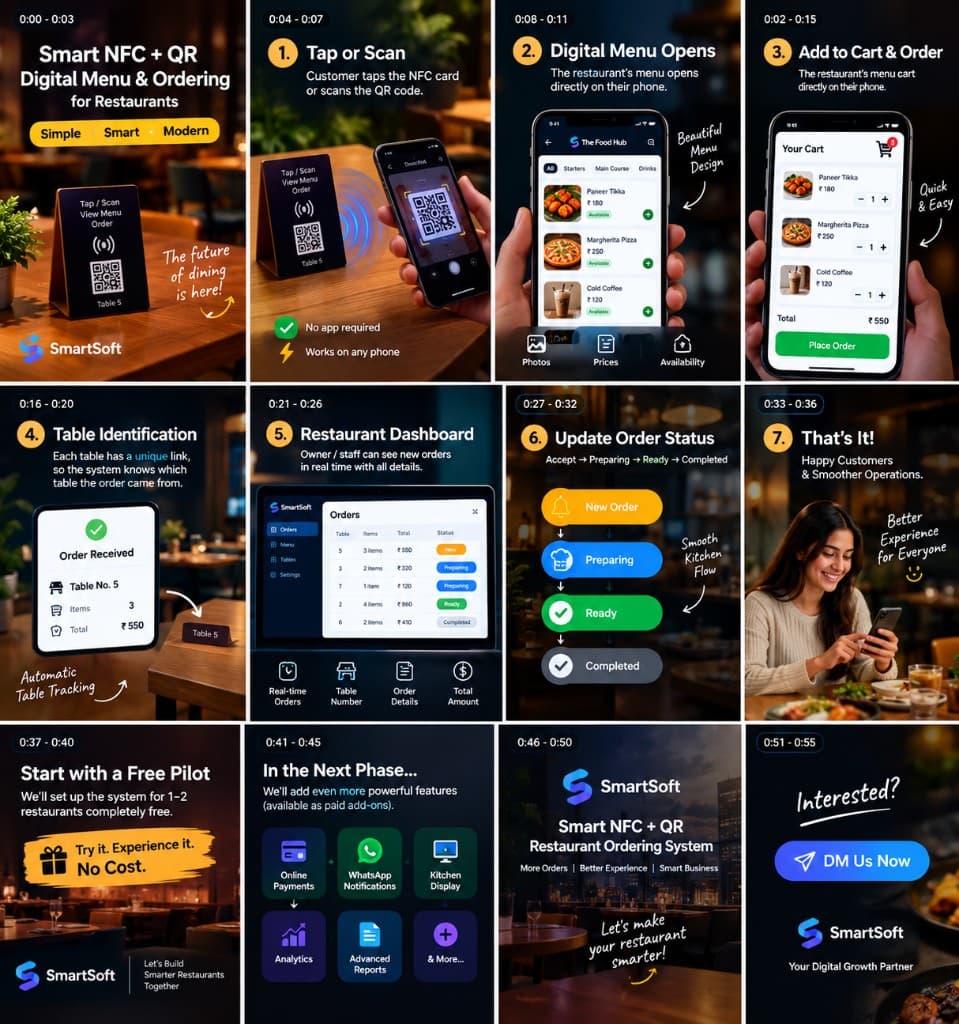
SmartSoft Solutions is building the complete NFC + QR table-ordering system for Indian restaurants — not a sticker, not a theme. One product covers the whole loop: tap or scan, live menu with photos and prices, guest cart, unique table links, and a staff dashboard that shows table number, items, quantity, total, and status (accepted → preparing → ready → completed). No guest app.
We are opening a free pilot for 1–2 restaurants so this full loop runs with real customers before payments, WhatsApp alerts, and kitchen screens. Product page: complete NFC + QR ordering system.
Printed card vs QR PDF vs tap-to-order
| Approach | Guest experience | Floor / kitchen | Typical failure |
|---|---|---|---|
| Printed menu | Familiar | Staff write tickets | Prices and 86’d items stay wrong for weeks |
| QR → PDF / Instagram | Phone needed, still no cart | Order still taken verbally | Slow load, zooming, no table identity |
| NFC + QR ordering | Tap or scan, cart, place order | Dashboard shows table + items | Needs a working menu and staff who watch the board |
NFC is the fast path on phones that support tap. QR is the backup so nobody is stuck. Both encode the same unique table URL. That is the piece most “digital menu” vendors skip — without a table identity, you only have a brochure.
Why unique table links matter
If every table opens
/menu- Table number
- Line items and quantities
- Notes (less oil, extra raita)
- Total shown to the guest
Staff then move the ticket: accepted → preparing → ready → completed. That is table ordering, not a PDF.
What guests should see on the phone
No app store. No forced login for a first order. The browser is enough.
- Categories that match how you actually cook (starters, tandoor, breads, not a 12-level CMS)
- Prices in rupees, including taxes if you quote that way on the floor
- Photos only where they help (signature dishes), compressed for mid-range Android
- Availability so 86’d items disappear instead of disappointing the table
- Cart + place order, with a clear “sent to kitchen” state
If the page takes eight seconds on Jio in a basement dining room, guests will call the waiter. Performance is part of hospitality.
What the owner dashboard must show
A restaurant does not need a 40-metric analytics suite on day one. It needs:
- New orders, loud enough to notice
- Table number that matches the physical card
- Item list, quantity, total
- Status buttons the floor can tap with one hand
- A way to hide an item when the kitchen runs out
Payments, WhatsApp pings, a kitchen TV, and hourly item reports are phase two — after the basic loop works on a Saturday night.
NFC cards in an Indian dining room
NFC cards sit on the table like a coaster or are stuck under a standee. The guest taps (Android and recent iPhones). If tap fails, they scan the printed QR on the same piece. Encode one URL per table on both. Reprinting a QR when you remap tables is cheaper than reprinting a 16-page menu after a rate change.
You still need a waiter for hospitality, drinks timing, and exceptions. The system removes the “let me repeat that to the kitchen” round-trip.
How to choose a vendor (without the pitch deck)
Ask to:
- Open a demo table URL on your own phone, not a Figma file
- Place a test order and watch it appear with a table number
- Change an item from available to 86’d and reload as a guest
- Hear what happens when Wi‑Fi is weak (mobile data should still work)
Walk away from “we’ll add the cart later” if you are buying ordering, not a photo gallery.
SmartSoft’s public offer is written on the NFC digital menu service: unique table links, live menu, cart, dashboard statuses, and a free pilot. We do not publish fake restaurant case studies. When a pilot restaurant is live, that URL will sit on projects like our other client work.
Pilot scope vs paid extras
Pilot (free, 1–2 restaurants): menu, photos, prices, availability, cart, table identity, staff statuses.
After it works with real tickets: UPI/cards at the table, WhatsApp notifications, kitchen display, analytics.
If you also need a marketing website for reservations and Google searches, that is a separate business website with a fixed quote — do not mix “rank for cafe in Noida” with “Table 8 wants two butters.”
Bottom line
A digital menu that cannot take an order is still a brochure. NFC + QR with per-table links and a live board is how you let the phone do the ticket. Apply for the pilot on contact or message +91 74560 96455.
Planning a website or store?
Get a fixed project quote from SmartSoft Solutions.
Frequently Asked Questions
Do guests need to download an app?+−
No. They tap the NFC card or scan the QR code. The menu opens in the phone browser so they can browse and place an order.
How does the kitchen know the table number?+−
Each table has a unique link on its NFC card and QR code. The order is stored with that table identity, so the dashboard shows Table 7 vs Table 12.
Is there a free trial for restaurants?+−
SmartSoft is running a free pilot for 1–2 restaurants to test real orders. Apply via the NFC digital menu page or contact form. Payments and extra alerts come after the basic flow works.
Is this the same as a PDF menu behind a QR code?+−
No. A PDF is still a static menu. This system includes a live cart, item availability, and a staff dashboard with order status.


